
Elevate Difference

Books

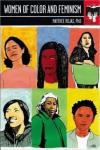
Women of Color and Feminism

If many postmodern feminists would have it, colour or “race” wouldn't be of primary concern in theorising oppression; a woman would be seen as much more than her race, class, and sexuality. In other words, every woman's experience of oppression is nuanced, different.

Beyond the Miracle Worker: The Remarkable Life of Anne Sullivan Macy and Her Extraordinary Friendship with Helen Keller

As a child, I was very intrigued by the life and story of Helen Keller. Though she was deaf, blind, and initially mute, she went on to live a full life: graduating college and publishing books. While Helen Keller’s remarkable story has served as an inspiration to us all, there is an even more remarkable story in her teacher Anne Sullivan Macy. I did not know much about Macy aside from her being the person who opened up Keller’s world and became her life-long companion.

Resolving the Paradox of Jean-Jacques Rousseau's Sexual Politics

Professor Ice begins her book with what she calls a paradox within philosopher Jean-Jacques Rousseau's social philosophy. In her words, “Rousseau's views on women sits [sic] in tension with his philosophy of freedom and equality.” That is, Professor Ice refers to the apparent discrepancy between Rousseau's vision of freedom for men and his endorsement of subordination for women.

German for Travelers : A Novel in 95 Lessons

Norah Labiner's third novel German for Travelers reads a lot more like poetry than prose. Each chapter, which is framed as a lesson, begins with a seemingly disconnected sentence translated into English from German, before jumping to a different time period, country, character, or all three.

Keeping the Campfires Going: Native Women’s Activities in Urban Communities

Keeping the Campfires Going: Native Women's Activism in Urban Communities is a collection of essays featuring the struggles and triumphs of Native women living in urban communities. Written about people living throughout North America from San Francisco to Chicago to Vancouver to Anchorage, the essays focus on the role that women have played in keeping their native people connected as a community.

Rough Magic

Most of Caryl Cude Mullin’s Rough Magic takes place on a magical island, the home of sirens and air spirits. When an exiled Queen bent on revenge and accumulating more power takes control of the island’s magic the fate of its inhabitants is left for the islands own control. Chiara, a young Princess with an interest and talent for magic, is ordered by her father to marry a Spanish Prince for his own ambition.

Stage Fright: 40 Stars Tell You How They Beat America’s #1 Fear

The collection of interviews presented in Stage Fright is a well-rounded accumulation of several years of interviews with various publicly known speakers. Ranging from politicians to a timeless poet to comedians, this collection is rich with insight from the people that have spoken publicly and professionally for decades. Mick Berry questions interviewees about when, why, and how they conquered their stage fright.

Prospect Park West

Brooklyn’s famously high-end and yuppie Park Slope neighborhood is nearly a character itself in Amy Sohn’s Prospect Park West. The book follows the lives of four women living in the neighborhood. There is Melora Leigh, a troubled actress, who joins the neighborhood co-op for good PR. Her time there ties her to Karen Shapiro, an overly protective mother and social climber desperate for a new apartment in the best school district.

Dead Floating Lovers

Set in the lush landscape of upper Michigan, Dead Floating Lovers (the second in Elizabeth Kane Buzzelli's series of the Emily Kincaid mysteries) chronicles the experiences of aspiring mystery writer Emily Kincaid, who is enmeshed in one investigation after another as a journalist-cum-sidekick for the local law—her friend Deputy Dolly Wakowski. Floating in a remote upper Michigan lake, Deputy Dolly discovers bones that she thinks belong to her

Dark Hunger

Where do I begin? I guess I should start with an admission. I’m a horror geek. I love horror movies, both the good and the bad; horror novels, ghost stories, midnight walks, supernatural based TV shows, and even a good Scooby Doo episode. I also love romance. Give me a good love story, and I’m hooked in spite of myself. So when I saw Dark Hunger, the second book in Rita Herron’s Demonborn series, I was looking forward to it. I learned my mistake quickly.

Selenidad: Selena, Latinos and the Performance of Memory

“This is not a book about Selena, but about what it means to remember her,” explains the author in the opening statement of her book. Remembering Selena is a remedy that releases the emotions of her grieving family, her fans, and those who became engaged in her music only after discovering the impact that she had on Latino communities. Selena, a pop diva from Corpus Christi Texas, was murdered by her fan club president, Yolanda Saldívar on March 31, 1995. Instantly, Selena became a posthumous icon—a symbol—the object of adoration by many.

Trees Zine #4

A quarter page booklet of photocopied text with one off-center staple and as much profundity as you can cram in that meager space—how else would you present yourself to the world? I thought that zines went out with the twentieth century, at least in the sense of personal confessionals, and journaling went out traded out for online diaries, journals, and social networks. These days even the formal blog seems to be winnowing down to its base denominator: trading out contemplation for a sound bite, reflection for a terse witticism.

"What is an Apparatus?" and Other Essays

"What Is an Apparatus?" and Other Essays, is a collection of three essays by the Italian philosopher Giorgio Agamben. Although only fifty pages, this collection is quite difficult for the reader unfamiliar with Agamben's work. In the first essay, “What is an Apparatus,” the author engages with Foucault’s concept of the apparatus (_dispositif _in French).

Apple Geranium Leaf Pendant

A lot of people have brilliant discoveries after coming to New York City. In a place where the world collides, it's easy to understand why hoards of tourists walk around slack-jawed and eyes glazed wearing their wonder on their sleeve while snapping photo after photo of cobblestone streets turning into fish markets turning into ultra-modern glass and steel as far as the eye can see.

Fortune Cookie

“The signs are mixed, the next twelve months could bring new challenges and unexpected changes. Moulds may be broken wild some patterns may reoccur. A shedding of skin could be on the horizon. Moments of adversity, calamity, triumph, disappointment, delight and tedium should also be expected.” This astrological prose sums up the year of 1989 experienced by a twenty-four-year-old woman.

Not That Kind of Girl

Carlene Bauer was a seven-year-old child when her mother became a born-again Christian, catapulting the family into a regimen that put avoiding devilish distraction front and center.

The Queen of the Ring: Sex, Muscles, Diamonds, and the Making of an American Legend

One of my most irritating memories of the early and mid-1980s is my younger brother's insistence on having TV wrestling in the background on Saturday mornings. Even at age nine, the “sport” seemed staged, hokey, and fake. But imagine a time when wrestling was based on skill as much as show, when young American women saw it as an escape from poverty as much as a pass into celebrity.

Lost Alphabet

Lisa Olstein’s second collection of poems, Lost Alphabet, is a beautiful book of prose poems. The poems are written as entries in a naturalist’s notebook, and the entries are split into five sections. The speaker of the poems is never given a name, but is a lepidopterist living on the outskirts of a village of people that are not her own.

War Dances

In War Dances, Sherman Alexie’s new collection of stories and poems, we encounter characters attempting to come to terms with the challenges that life tends to throw at us in the contemporary world. The first story of the collection, “Breaking and Entering,” is about a Native American man who accidentally kills a Black teenager after the teenager broke into his house.

How to Leave Hialeah

In real life, I have had only a small glimpse of Miami, driving through on the way to the Florida Keys. After reading Jennine Capó Crucet’s story collection How to Leave Hialeah, I feel I have witnessed Miami life on the most intimate levels. This debut story collection won the 2009 Iowa Short Fiction Award and was a finalist for the thirty-fourth Annual Chicano/Latino Literary Prize.

Blood Sistas: The Chronicals of Black Uptown Girlz Growing Up in the Hood

As a White girl growing up in rural Wisconsin, I had no idea what city life was like. Post-college, I traveled, hoping to broaden my horizons and learn a bit about urban living. After that, I thought I had some pretty good ideas about what growing up in the city was like: living in an apartment, going to the laundromat, shopping at the small supermarket down the street, and hearing traffic and sirens twenty-four hours a day. After reading this book, I can tell you I know absolutely nothing about the intricacies of inner-city life.

Women Who Kill

Let me first just throw the creepiness right out there and admit I am a big fan of all media coverage related to serial killers. I love the horrible shows like Cold Case Files, and I love the even crappier rushed books written about every case.

The Blue Tattoo: The Life of Olive Oatman

The Blue Tattoo tells the story of Olive Oatman, a nineteenth century woman with an unusual life. In 1851, Oatman was violently abducted along with her younger sister by Yavapais after watching this group of Native Americans brutally slaughter the rest of her family.

From Cronkite to Colbert: The Evolution of Broadcast News

I consider myself a bit of a news junkie so a title involving both Walter Cronkite and Stephen Colbert immediately caught my attention. While Cronkite was first able to break heavy concepts down for the masses and Colbert was later on able to do the same using humor, From Cronkite to Colbert is not able to do either.

The House at Sugar Beach: In Search of a Lost African Childhood

Helene Cooper’s memoir about growing up in Liberia and moving to the United States paints a portrait of a girl trapped between two cultures and countries worlds apart from one another. Cooper is the descendant of freed African American slaves who returned to Africa to found Liberia in the early 1800s. Her upbringing was a privileged one, as a member of the small Liberian upper class composed almost entirely of the descendants of Black American settlers.

Black Feminist Politics from Kennedy to Clinton

There has to be something said for being able to succeed in concisely communicating the issue of Black feminism and politics, but I think Duchess Harris has done just that.

Mass Destruction: The Men and Giant Mines that Wired America and Scarred the Planet

In Mass Destruction, Timothy J. LeCain carefully examines the industrial open-pit mining industry in America, and its technological, social, and environmental impact on our modern world. Full disclosure: Books like this have a tendency to take my enviro-angst to a whole new level.

Street Art San Francisco: Mission Muralismo

I have to admit: laziness compelled me to review this book. It is, after all, a book on murals, containing over 500 illustrations. How difficult could that be? Plus, I spent one month in 2002 as an intern at the Women’s Building in San Francisco’s Mission District. The Women’s Building is aglow with a brightly colored mural of women, hovering powerfully over the sidewalks. I had also gone on the Precipita Eyes mural tour. I had some sense of what to expect then.

First As Tragedy, Then As Farce

Slovenian philosopher and cultural critic Slavoj Žižek’s latest work—a call to the Left to reinvent itself in a time of international crisis—begins with a nod to Marx’s correction of Hegel in The Eighteenth Brumaire Of Louis Bonaparte: “Hegel remarks somewhere that all great events and characters of world history occur, so to speak, twice.

The Hidden Life of Deer: Lessons from the Natural World

“Poor deer,” quoth he, “thou makest a testament/As worldlings do…” - As You Like It, Act II, Scene 1 Oak trees plan ahead. In any given area, in any given year, they produce shrunken acorns by design not disease. Such meagre bounty keeps in check acorn-eating animals. Deprived of autumn calories, many of these animals starve to death come winter. Thus fewer ravenous mouths eat healthy acorns in years following; thus more acorns survive; thus more new oaks sprout and thrive. In fall 2007, the oaks around Peterborough, New Hampshire, resorted to shrunken acorns.